
Just a quick hit today, that hopefully will be a popular post for people to return to again and again.
Q: How do I format my writing for an editor, agent, or publisher?

First, understand that an editor, agent, or publisher is going to be working on your manuscript to make improvements. Manuscript format for submission to someone else who will be helping prepare your book is different than formatting for publication directly. A book on the shelf or ebook is single-spaced, has narrow margins, headers, footers, and even embellishments, like a drop cap, lots of white space, or graphics between scenes.
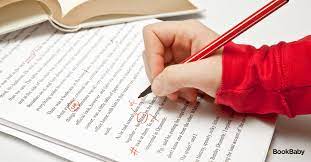
But an editor who will be moving words around does not care about graphics or even layout. It’s all going to be shifting anyway as words and phrases and paragraphs change. Submitting to a traditional publisher has the same needs. The manuscript will pass through multiple hands, each making changes.
Embellishments would be distracting from their purpose and complicate their work. So…
Formatting for submission to an editor or publisher
If your editor or publisher has guidelines, use those. In the absence of explicit guidelines, use these to give them the cleanest copy to be able to do their jobs effectively.

- Standard page size (“Letter” or “A4” if you’re in Europe). Orientation “portrait” and columns “1.”
- Margins should be wide enough so that if someone will be printing it out for hand-marking by an offline editor, there’s space to write notes. Typically this is one inch (2.5 cm) on all sides.
- Manuscript lines should be double-spaced, so there’s room above and below a line to see the marks for adding a comma or replacing a word.
- Align the story paragraphs left. Full justification will be applied only after all the standard spacing has been checked (two spaces can easily hide in full-justified text).
- While a lot of computers allow for zooming in on text to enlarge it for a reader, it’s courtesy to start with a suitably large and readable font. Typically Times New Roman, or another clear serif font, at 12 point type size is recommended.
- Paragraphs should be indented 1/2 inch (about 1 cm), again, so it’s clear that a paragraph is beginning, in case the previous line went all the way to the right margin.
- Scene breaks should be marked with a character rather than a graphic. Choose either a string of asterisks (****) or a string of pound signs (###).
- At the end of a chapter, before the start of a new chapter, use Ctrl-Enter to push the new chapter to start on a new page.
- Title chapters (“Chapter 1” or “Chapter One”) and align consistently (center is preferred).
- If you have an epigraph, italicize and center it.
- If you have a time/date or place name, or a character name to denote point of view change, italicize it and align left.
- Dialogue should be contained within double quotes (” “). Quotes inside dialogue are single quotes (‘ ‘). Text messages are written in italics: Speaker: text message content. Direct internal thoughts are italicized. These adjustments help these unique elements of story writing stand out so the editor can find them in a paragraph quickly and determine how they need to be organized between narrative and the dialogue tags. And most of them will stay that way through the book formatting and publication.
Agent formatting
If your agent will also be editing, use the above formatting if they don’t provide their own guidelines. If your agent is reading/reviewing to decide how to market it, then present it as if it was a book. Make their reading experience as close as possible to the end reader experience you envision.
~ Lara
Discover more from LZ Edits | Editing Services
Subscribe to get the latest posts sent to your email.
 LZ Edits | Editing Services