
Character development, or characterization, involves a lot of psychology, IMHO. Filling out character sheets lends itself to very stereotypical presentations. Joe Friday’s “just the facts, ma’am” comes to mind when I see them. They even look like rap sheets, IMHO – very off-putting. If you want full-bodied characters, you can’t boil them down to words like “trustworthy” “svelte” “hazel eyes” “5-foot-10.”
When I ask a writer to tell me about their character and they start this way – “Well, they’re 5’10”, blue eyes, a billionaire…” Immediately I stop them. I want to hear their story, not their statistics. So does the reader.
It isn’t about being 5’10” literally. It’s how it makes them feel. The woman who is 5’10” might feel gangly, awkward, pretend to slouch, or always wear flats. She’s trying not to give anyone the impression she’s towering over them, or anything negative associated with “towering.” This isn’t just about being 5’10”. She feels that she has to compensate because she had a male she really liked in high school call her “too tall McCall.” Well, shoot.
That, in a nutshell is how you handle characterization. Don’t tell the reader up front about past abuse. Show the character as they are emotionally and mentally as a survivor. Don’t just state a character’s minority status, show how they behave trying to minimize it because they had it used against them in a prior relationship at work or at home.
Craft books
These craft books are quite good at laying out how to create characters that are shown to be who they are, multi-layered, multi-faceted, and driven by their personal history.
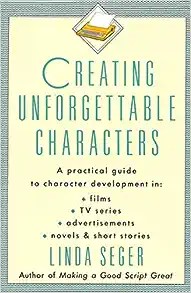

- Creating Unforgettable Characters by Linda Seger. I read this probably two decades ago and her examples and presentation of the topic has never left me. Seriously the finest discussion of character development I have ever read.
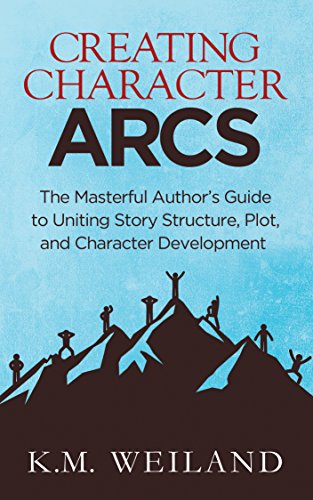
- Creating Character Arcs by K.M. Weiland. She goes just a touch too heavy on what she calls the character “wound” and “the lie the character believes,” but the idea of a character’s past (and their emotional reactions and adjustments to it) informing who they are in the present story is super-huge and she covers all of the possibilities.
- Creating Characters: The Complete Guide to Populating Your Fiction edited by Writer’s Digest Books. This is a collection of the magazine’s best columns on character development. The organization of it makes it an excellent reference for a quick look-up of exactly what you need for a particular character type or situation.
Literature
The best other resource for teaching character development is reading books with complex, yet clear, characters. On the page. If you want to write complex characters you need to see how the words meld together to paint the inner and outer life, how a writer uses words to introduce and develop a character. An actor or director’s interpretation results in images not words you can see compared and contrasted and placed “just so” for impact. So, do not watch the movie of these books. Read them.
To Kill a Mockingbird by Harper Lee. I also recommend Go Set a Watchman, but it’s a more nuanced illumination and should only be read AFTER studying how Atticus Finch, Scout, and even Tom Robinson and Boo Radley are fashioned as complex characters through Lee’s careful word choices.
The Fault in Our Stars by John Green. Hazel and Augustus are superbly drawn.
The Perks of Being a Wallflower by Stephen Chbosky. Charlie and his friends are illuminated with such carefully chosen scenes. It reminded me of Trumpet of the Swan by E.B. White in its sharply depicted characterizations of characters who refuse to be stuffed into the neat, tidy little cubbies of their story roles. Both inner and outer lives on display.
~ Lara
Discover more from LZ Edits | Editing Services
Subscribe to get the latest posts sent to your email.
 LZ Edits | Editing Services
“When I ask a writer to tell me about their character and they start this way – ‘Well, they’re 5’10”, blue eyes, a billionaire…’ Immediately I stop them. I want to hear their story, not their statistics. So does the reader.”
Such great advice. I try to think of it this way, when you think of someone you really love (or hate), what’s the first thing that comes to mind? Probably not their height and eye color.
LikeLiked by 1 person
Yep, exactly!
LikeLike