
To continue my previous topic of starting at the beginning with your stories, I’m going to talk today about setting up your setting.
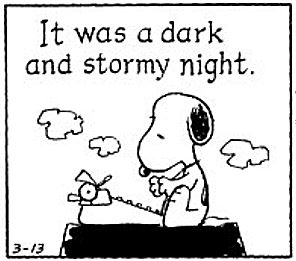
Setting is the place where your story takes place: New York, Paris, a loft in Soho, a suburban neighborhood, or a rural community, or even a castle on the Rhine. It’s anywhere the characters are doing their thing.
The biggest elements of setting are, of course, the things that the character can see and touch, so including descriptions of those things is step one in creating your story’s setting:
- Name the space: bedroom, antechamber, third floor walk-up, brownstone, cottage, strawberry farm. Take only a short amount of space, a sentence or two, to describe things that are mysterious or unknown to the POV character.
- Add descriptions of place by describing things in this space that your character is interacting with. And definitely you should have them interacting with things. Static characters, who just talk, might as well be on radio — no visuals to engage the reader’s imagination.
Sprinkling in details this way, you will describe the space so your characters aren’t floating in an amorphous ether AND give your POV character depth (and background) in snippets that readers prefer over info-dump.
The setting details you choose to include will be filtered through your POV character’s priorities, preferences, and attitudes about these spaces and items.
Filtered through their priorities means to always circle back to why the character is in this space. Their objective or motivation for being here will have them focusing on different things.
Example: If the POV character is being called in front of their stern father for a reprimand, the room is familiar, so you’re going to just name the space. Then focus on the details of the father and how he is interacting with the things on his desk, for example. This is because the POV character is motivated to determine how angry or disappointed Dad is, and is searching for clues about the forthcoming punishment, glancing away to the desk, or the pen the father is twisting around his fingers (or maybe it’s family signet ring). If there’s a history (backstory) of being summoned to this room and always being compared to the elder brother, you can reveal that in the same moment you have the character’s gaze directed by the disappointed parent to the pride of place portrait on the wall: “Jonah would never have…” It would be info-dump to introduce that portrait the moment the POV character steps across the threshold amid a laundry list of everything in the room before he’s even turned around from closing the door.
Note, what the character is focused on will determine what they internally note. For example, it is probably less important to the POV character that this is happening in late evening. So that detail can be skipped as you write the scene, or you have already established that it is after dinner at the end of a previous scene: “After dinner. My study.” If you need to share the time of day to keep a timeline clear, tie it to something the POV character would care about.
Other sensory details can be brought in: Perhaps a grandfather clock ticks in the corner that the POV character likens to ticking down the minutes until his doom. Does the father’s penchant for cigars — and he’s got one lit up right now — turn the POV character’s stomach even more than the nerves of being summoned? That’s adding sound and smell to the sensory details. Does the POV character grip the back of the brocade chair instead of sitting immediately, using the feel of the fabric to ground themself, determined not to be made to feel small? That would add touch to the sensory painting. Engaging four out of five senses will more fully immerse your readers in the story.
And you didn’t spend more than a sentence on any one detail, while still moving the story forward with dialogue and inner narrative.
More to come
Of course, this is not all that setting is. Setting is also about the time (of day for scenes; season or year for stories) things are happening, and the culture of a place.
I’ll elaborate on these in my next blog in a couple weeks.
~ Lara
For more on setting, read these previous blogs:



Discover more from LZ Edits | Editing Services
Subscribe to get the latest posts sent to your email.
 LZ Edits | Editing Services