
Editing Availability update: My earliest availability is January and February 2026. A short project or two might fit in October, but that’s something I have to decide on a case-by-case basis. So if you’re looking and want to get a quote or sample edit, contact me for a 30-minute Zoom discussion here.
Now for this month’s topic. Handling pronouns (and nouns) properly in your stories.
Many Americans of a particular age may recall the Schoolhouse Rock! music videos produced in the 1970s. The Pronouns one made it clear that you can avoid word count bloat, and reader exhaustion by replacing nouns (either proper ones like names, or common ones like aardvark) with pronouns. For five year olds this is fantastic news.
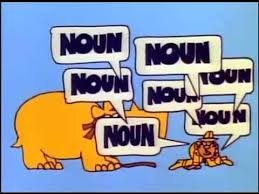

The concept seems rather straightforward. Replace a noun that keeps getting repeated, like a character’s name, with their pronouns, and you’ll avoid wearing out the reader.
But in some situations constantly using pronouns can leave the reader confused. Let’s say you have both the female-identifying narrator and her best female-identifying friend out socializing. You’ve introduced the reader to both characters in previous scenes. And you do so, at the beginning of the scene, too. Then you use nothing but pronouns…
“Two Sumatrans, please, Ruth,” Elena said. Jess noticed the woman wasn’t wearing a tag, a definite sign of Elena’s familiarity with the establishment and staff.
“Of course.”
“Is Nami here?” she asked while she was grinding and setting up the brew in a press.
Her reply was quick. “Not this morning, maybe afternoon. Her arthritis was acting up.”
“Is that happening more often lately?” she asked. “I haven’t been by in a while.”
“Yeah,” she replied. All the while she was continuing to efficiently prepare their cups. “She won’t admit it, but she’s definitely having more bad days than good.”
She took her coffee from her and followed her out to the patio. “Is Nami the owner?”
“Yep, she’s Nigerian, brought over by her parents when she was four. Ruth was her son’s wife.”
“Was?”
“Gopal died in Iraq a few years ago.”
“Ruth’s a widow?” The woman had seemed as young as her.
“Yes. She and Kai live with Nami.”
“Kai?” She was beginning to get overwhelmed by all the new names.
“Kai is Ruth and Gopal’s son, Nami’s grandson. He’d be almost… seven now.”
So, can you figure out which character asked, “Is Nami here?” And while logic dictates that the barista is the one grinding the beans, is she the person who asked the question?
You probably reread the passage a couple times just now and still can’t figure it out. There’s literally four women in the scene. Two are our girl friends, who are out for coffee, Elena and Jess. Elena is the one familiar with the coffee bar. One is the barista (and widow), Ruth. The last is the coffee bar’s owner, Nami.
How to Apply Pronouns Wisely
First… Leave stuff inside the quotation marks alone. People do not say the names of the people they are talking to all the time. Don’t add that in to clarify anything. Here are some specific ways to fix the confusions…
Use gestures
People will preface a particular comment in a multi-person dialogue toward someone with either their name or a physical gesture that gets their attention, such as reaching out and placing their hand on their wrist.
Use the narrative parts
Narrative is the stuff that is not dialogue to clarify things for the reader. Whenever it might be unclear, include the person’s name, or their role, in the narrative.
“Yeah,” Ruth replied. All the while she was continuing to efficiently prepare their cups.
Keep actions and dialogue together
If the same character speaks and does an action, keep those two things in the same paragraph. Reader expectation is that dialogue and actions grouped in the same paragraph are being said and done by the same person.
Action by another character? Start a new paragraph. Dialogue by one character that is disrupted, or affected, by the actions of another? Use words to clarify.
“Yeah,” Ruth replied. All the while she was continuing to efficiently prepare their cups. “She won’t admit it, but she’s definitely having more bad days than good.”
Readers will understand that the “she” in Ruth’s dialogue is referring to Nami, since she is answering the question that has just been asked. Meanwhile the ‘she’ outside the dialogue is clearly referring to Ruth herself because it follows after (the noun preceding a pronoun is called its ‘antecedent’) her name in the previous sentence. If an antecedent is not before a pronoun, or is the wrong noun, that’s another way confusion can arise.
Use ‘relational’ nouns
Be crystal clear who your POV character is and write all ‘relational’ nouns from that perspective. Jess is our POV character here. Elena is ‘her friend’, and took Jess to a coffee bar that Elena knows well. So in relation to Jess, Ruth can be called ‘the barista’, and Elena ‘her friend’.
Jess noticed the barista wasn’t wearing a tag, a definite sign of her friend’s familiarity with the establishment and staff.
Now, putting these thoughts into play, read this corrected passage:
“Two Sumatrans, please, Ruth,” Elena said.
Jess noticed the barista wasn’t wearing a tag, a definite sign of her friend’s familiarity with the establishment and staff.
“Of course,” Ruth said.
“Is Nami here?” Elena asked while Ruth was grinding and setting up the brew in a press.
The barista’s reply was quick. “Not this morning, maybe afternoon. Her arthritis was acting up.”
“Is that happening more often lately?” Elena asked. “I haven’t been by in a while.”
“Yeah,” Ruth replied. All the while she was continuing to efficiently prepare their cups. “She won’t admit it, but she’s definitely having more bad days than good.”
Jess took her coffee from the barista and followed her friend out to the patio. “Is Nami the owner?”
“Yep, she’s Nigerian, brought over by her parents when she was four. Ruth was her son’s wife.”
“Was?”
“Gopal died in Iraq a few years ago.”
“Ruth’s a widow?” The barista had seemed as young as Jess.
“Yes. She and Kai live with Nami,” Elena said.
“Kai?” Jess put a hand to her forehead. She was beginning to get overwhelmed by all the new names.
“Kai is Ruth and Gopal’s son, Nami’s grandson. He’d be almost… seven now.”
Once you fix the scene and make it clear who walked out to the patio, you realize that the two friends are one-on-one again and dialogue tags aren’t necessary. But without the clarity early in the scene, it would be a complete mess.
~ Lara
Workshop Challenge
This month’s Workshop challenge prompt is to write a dialogue heavy scene of at least three people (they do not have to all be the same gender identity, but at least two of them should be), using only names.
Then in a second pass, revise with pronouns where possible, but still making it crystal clear who is saying and doing what.
Submit your unclear and clear versions to me here if you want feedback.

Discover more from LZ Edits | Editing Services
Subscribe to get the latest posts sent to your email.
 LZ Edits | Editing Services