

Sections
Writing Advice

Last month, we talked about how to build your story’s ending from your character’s wound and assuaging their fears or the Lie they’ve been telling themselves all this time.
There’s a concept called “mirroring” that will make your story resonate with readers. The psychology of the “full circle” sense of completion cannot be overstated. It’s nostalgia and growth all in one visual and visceral package.
If your story’s opening scene is full of chaos, the mirror-scene ending your story should now show the main character at peace, inwardly and outwardly, enjoying the positive things that accepting change – and being changed – have brought into their life.
The first type of mirroring is done with the setting: same place as the opening scene, but now joy abounds where pain (or loneliness) once lived. Let’s take You’ve Got Mail. The opening scene(s) for both Kathleen and Joe are frenetic mornings with their partners, and both are hiding a part of themselves from these partners. And they walk out and through the city’s streets (and even cross paths – though they have no idea) at a park on their way to their jobs. Then, at the end, Joe has invited Kathleen to meet him at the park where he plans to reveal himself. And there, he does so, risking her ire at his true identity for a chance to be her partner, without any more secrets. Cue the happily ever after when she admits she was hoping, somehow, that it was him all along, and so has revealed the secret of her heart, too.
This beginning and ending also showcases the story’s theme: one must live one’s truth to be truly happy. Going along to get along is only a recipe for a dissatisfied life.
The second type of mirroring does not require the same setting, but instead features a similar situation or quandary wherein the character who has changed now makes a healthier decision. For example, if a character begins a story by leaving home – running away, perhaps. The same character at the mirror end of said story will make a choice to enter a home – or join a family (found family trope) – aware there can be difficulties, but now willing to face them, because through the story events they now understand that running away will never solve anything.
So, consider using your story’s theme to develop the final image you’ll leave your readers with.
Editing Advice
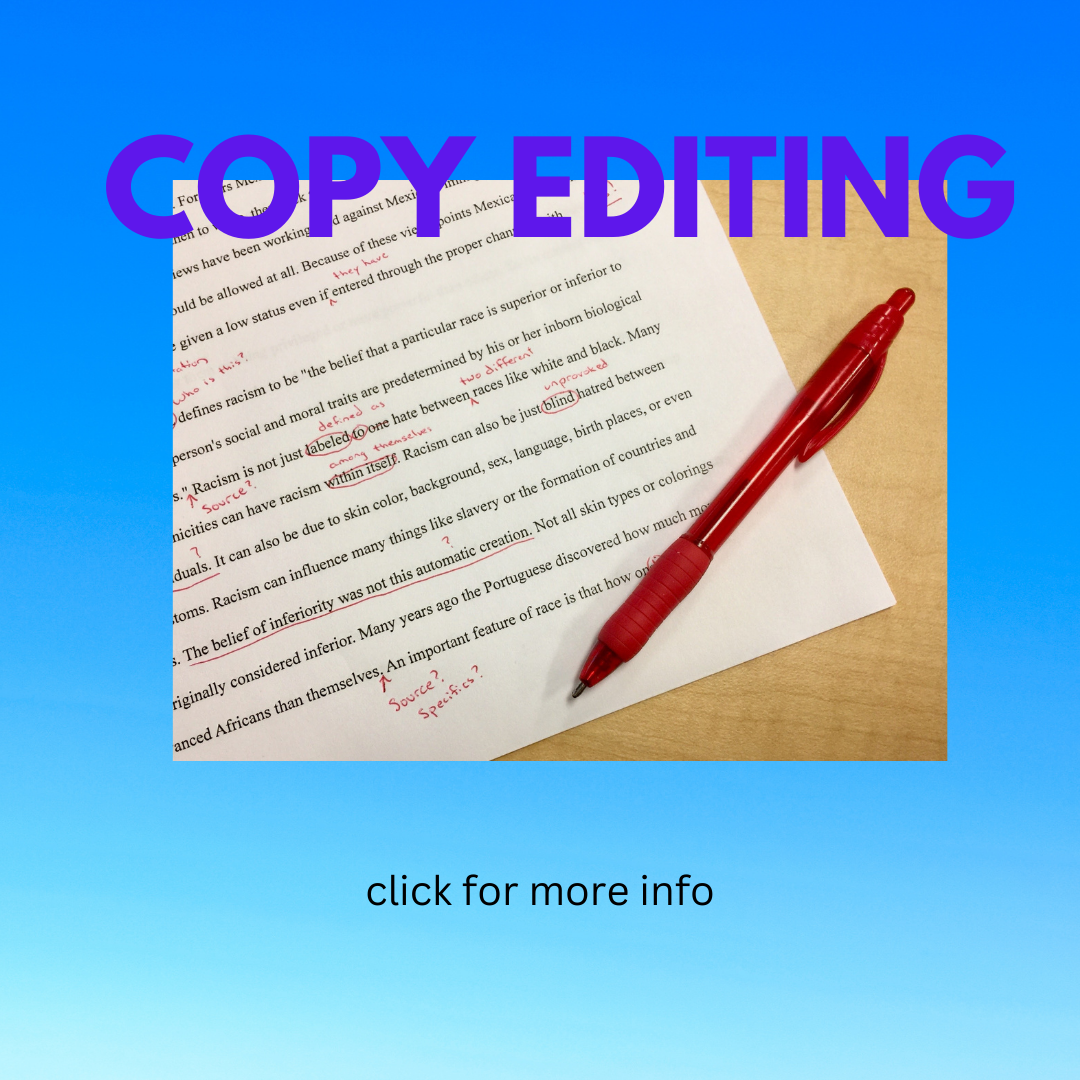
Last month, we discussed how word choices can show VOICE and TONE, and before that we discussed how sentence structure affects PACING. So, this month, let’s talk about how all three can be affected by how you structure your paragraphs.
The first, most basic rule of paragraphing, as you probably guess from writing essays in school: elaborate only one piece of a topic. Each new sentence should build on the ideas presented in the one before it. For fiction, this translates best to how to write descriptive paragraphs filled with the actions of (you guessed it) one character–preferably the POV character.
Paragraph your way to powerful prose
Let’s describe the layout of a room. Start with the general and work your way to more and more specific:
She strode into the office. Motes of dust danced in the light of the setting sun illuminating the massive black oak desk facing away from the window. A utilitarian fluorescent lamp lit up the papers strewn on the blotter beneath a fountain pen laying in a drip of ink.
Someone had just been in here. She backed up and turned slowly around. The air before the floor to ceiling bookshelves in front of her was dust-free. Even the upholstered wingback chairs didn’t have so much as a dimple in their cushions where they sat beneath a standing floor lamp with two smoked glass lights.
She inhaled, catching only the ozone smell from the fluorescent bulb.
The POV character enters the space, looks around and notices big details first. When their objective – finding someone – is not met, they shift their focus to look around the room. So, the author shifts to a new paragraph. If that wasn’t done, the POV character’s thinking about her goal (Someone had just been in here) would have been lost in the middle of the paragraph, and thus lost to the reader. That would have made the paragraph feel like info dump.
Each paragraph moves from general description to more specific, and in the order of its relationship or proximity to the previous detail. The character turns around the room. Their gaze doesn’t jump from the western wall (with the window and the desk) to the bookcases on the northern wall, without first noticing the lamp on the desk and the motes of dust in the air floating above it. Finally their gaze moves to the wingback chairs on the eastern wall. The author also made it clear that the person entered the room through the south wall without adding that detail Introducing clues for the reader to use to deduce the full physical space increases immersion in the story; this is another layer of “show don’t tell” because it encourages the reader to draw a picture in their mind.
Notice how we move to a new paragraph with some internal? This keeps the description on-point, keeping the reader focused on the goal of the character, which is to find someone. For a big turn in direction (like surprise or interruption) or a change in goal, you should start a new paragraph. And maybe it should be by itself:
Where‘d they go?
The search of the room didn’t turn them up, so the character wonders where “they” went. With this one sentence alone on the line, this internal thought also lands on the page with a startle, perhaps a thunk or a drop of anxiety or dread.
If you added more details around it, more actions, or the filter words (don’t do this!) “she thought,” you will undercut that emotional impact:
Where’d they go? she thought. Looking over her shoulder, she frowned. No one had left the house.
White space brings a reader’s focus to the detail. In the same way that centering your title at the top of your research paper, in larger font, and all alone, single-sentence paragraphs on a line by themselves draw the reader’s eye to a focal point, and draw their emotions to focus there, too.
Where’d they go?
Looking over her shoulder, she frowned. No one had left the house.
There is also a pause that happens in the reader’s inner voice reading as they adjust their gaze to find the start of the next paragraph and move to the next line. That adds extra time to the pause in the action. No need to write “she paused to think.” The action you write, or the paragraph break you make, has already added the time.
Reader psychology and basic biology
In properly formatted stories, there’s an indent that starts each paragraph. This indent means that the leading line of a paragraph is shorter than the rest of the paragraph. That small, half-inch space at the start of the line is white space. The reader’s eye does not whip quickly to it from the other end of the previous line. It takes a moment to search for it and refocus.
Yes, that movement can feel instantaneous, but if you extend the white space, you lengthen that time of adjustment, because it detours from the norm or the expected. A uniquely formatted paragraph that the reader hadn’t experienced in every other book they’ve read will create a sense of novelty that will make the moment in your story (or perhaps the entire story) unique and memorable.
Conclusion
When you are ready to shift your reader’s focus, or want to introduce a different emotion, start a new paragraph. When you want to introduce a shock or new focus, go to a new line and keep it short enough to stay on its own line.
Alone on a line, one sentence, or just one word, can be a powerful turn in your story’s emotional rollercoaster.
Service Availability

I have two slots remaining in December and have begun scheduling 2025. Contact me through my website to schedule your edit today.
~ Lara

Discover more from LZ Edits | Editing Services
Subscribe to get the latest posts sent to your email.
 LZ Edits | Editing Services
Loved this! Thank you. 🙂
LikeLike